How to Do AI Research
Published on Saturday, 06-09-2025
(Adopted from MIT MAS.S60 How to AI Almost Anything, Spring 2025)
(Youtube: https://www.youtube.com/watch?v=104FX8MYKAM)
How to Do AI Research
Artificial Intelligence is one of the most exciting frontiers of science today. But if you’ve ever wondered how AI researchers actually come up with new ideas, test them, and publish papers, you’re not alone.
In a lecture from MIT’s How to AI (Almost) Anything course, Professor Paul Liang walked through the nuts and bolts of doing AI research. His message was clear: you don’t need to be a genius with a once-in-a-lifetime idea to contribute. What you need is a process.
This blog post distills those lessons into a practical roadmap for anyone curious about getting started in AI research.
Research Is an Iterative Loop
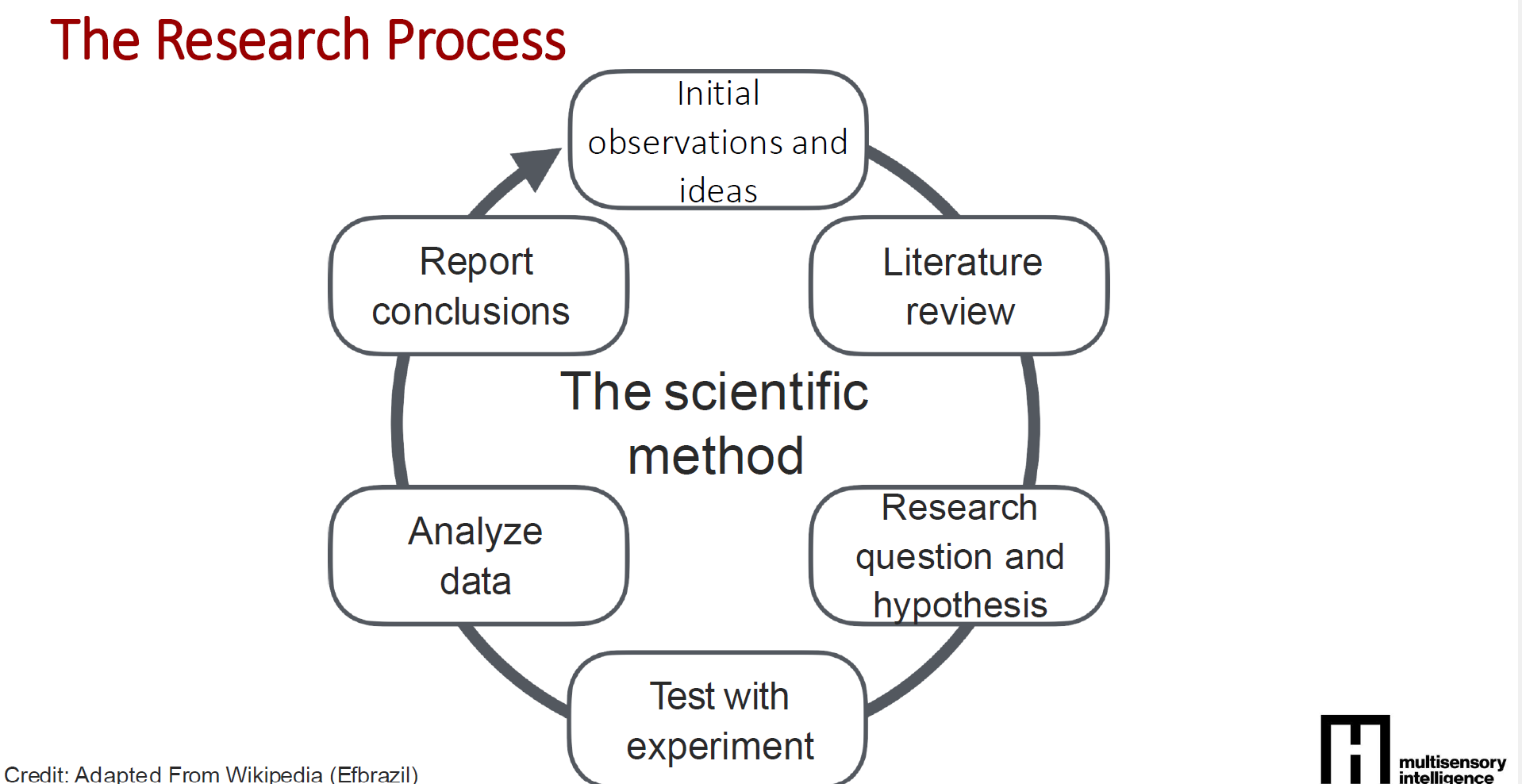
Think of research as a loop rather than a straight line:
- Start with observations and ideas. Maybe you notice that a language model struggles with certain types of text.
- Review existing work. Check if others have studied the same issue and how your idea fits in.
- Formulate research questions and hypotheses. Frame what exactly you’re testing.
- Run experiments. Build models, test datasets, and record results.
- Analyze and reflect. Ask why something worked or didn’t.
- Report conclusions. Share results and feed your insights back into the loop.
Every failed experiment isn’t a dead end—it’s fuel for the next idea.
Where Do Research Ideas Come From?
There are two main paths:
Bottom-Up Discovery Start with existing methods, run them, see where they fail, and try to fix those failures. This approach is safer and guarantees steady progress. It’s how most students begin their first projects.
Top-Down Design Begin with a bold, high-level vision (a “moonshot”), then break it into smaller, testable parts. This path is riskier, but it can lead to bigger breakthroughs.
In practice, researchers often blend both. For example, you might begin by testing a large language model on a new type of data (bottom-up), then realize your failures point toward a bigger redesign of how the model handles that data (top-down).
Asking the Right Questions
Good research starts with good questions. But not every question is useful.
Better questions are specific and testable. Example: Are all languages equally hard to model with current AI methods?
Weaker questions are vague or one-sided. Example: Does adding feature X improve performance? If the answer is “no,” you’re stuck. A better framing is: Why might feature X help (or not help) performance?
A hypothesis is your best guess about the answer, backed by reasoning. And importantly, it should be falsifiable—you should be able to prove it wrong.
Emerging Frontiers in AI Research
Professor Liang highlighted several areas where new researchers can make an impact:
New Data Modalities AI isn’t just for text and images. EEG brain signals, tactile data, speech patterns, and even multimodal fusions (combining different data types) are ripe for exploration.
Sensor Data Think of high-frequency, long-range streams like medical signals or environmental monitoring. How do you break them into meaningful chunks? How do you mix deep learning with traditional signal processing?
Reasoning Beyond making predictions, AI needs to take multiple steps to solve complex tasks. This can be explicit (teaching models step-by-step reasoning) or emergent (models learning reasoning implicitly).
Interactive Agents Imagine AI systems that help you shop, book travel, or generate slides by navigating websites and APIs—while also asking for clarification when uncertain.
Embodied and Tangible AI AI that moves into the physical world—robots that sense, act, and adapt.
Socially Intelligent AI Systems that can understand human emotions, build long-term relationships, and even play social games like Werewolf or Avalon where deception is part of the strategy.
Human-AI Interaction How do we build trust in AI? How should AI express uncertainty? Can new mediums of feedback (like gestures or facial expressions) improve collaboration?
Ethics and Safety Every breakthrough comes with risks: bias, unsafe outputs, or manipulative behavior. Research here focuses on identifying, mitigating, and preventing harms.
How to Read and Review Research
New researchers often drown in papers. Here’s a practical way to cut through the noise:
- Google Scholar search to find what’s been published.
- Check implementations on GitHub, Hugging Face, or Papers With Code.
- Browse recent conference proceedings from NeurIPS, ICML, ICLR, ACL, or CVPR.
- Read blog posts for simplified, expert summaries.
- Study surveys and tutorials to get the big picture.
Think of it like building layers: from quick overviews to deep technical dives.
Executing Research Ideas
Here’s how to avoid getting stuck:
- Start small: build a basic pipeline (data loading, simple model, evaluation).
- Change one thing at a time and test it.
- Scale gradually across datasets.
- Use ablation studies (remove components to see their impact).
- Add qualitative comparisons—visuals and examples help you understand why results look the way they do.
Writing a Paper
Publishing is the final step of research. The advice here is refreshingly concrete:
- Abstract & Intro: State the problem, gap, and your contribution.
- Related Work: Organize by themes, point out what’s missing.
- Figures: Add an overview diagram early and detailed ones later.
- Methods: Clear explanation of your approach.
- Experiments: Tied directly to research questions, with results tables and ablations.
- Discussion: Answer questions, highlight insights, and show visuals.
And yes—if you’re aiming for top conferences, your paper needs to fit exactly eight pages.
Tools of the Trade
Don’t underestimate the importance of infrastructure. Good research often depends on having:
- GPUs (local, lab, or cloud credits like AWS and Google Cloud).
- Open-source resources (Hugging Face, Papers With Code).
- A supportive team (peers, mentors, office hours).
Final Thoughts
Doing AI research isn’t about having one big idea that changes the world overnight. It’s about working systematically: generating ideas, testing them carefully, analyzing failures, and building on what you learn.
Some projects will be incremental improvements. Others may shoot for the moon. Both are valuable.
The most important takeaway? Your research ideas will evolve. And that evolution is the heart of the journey.