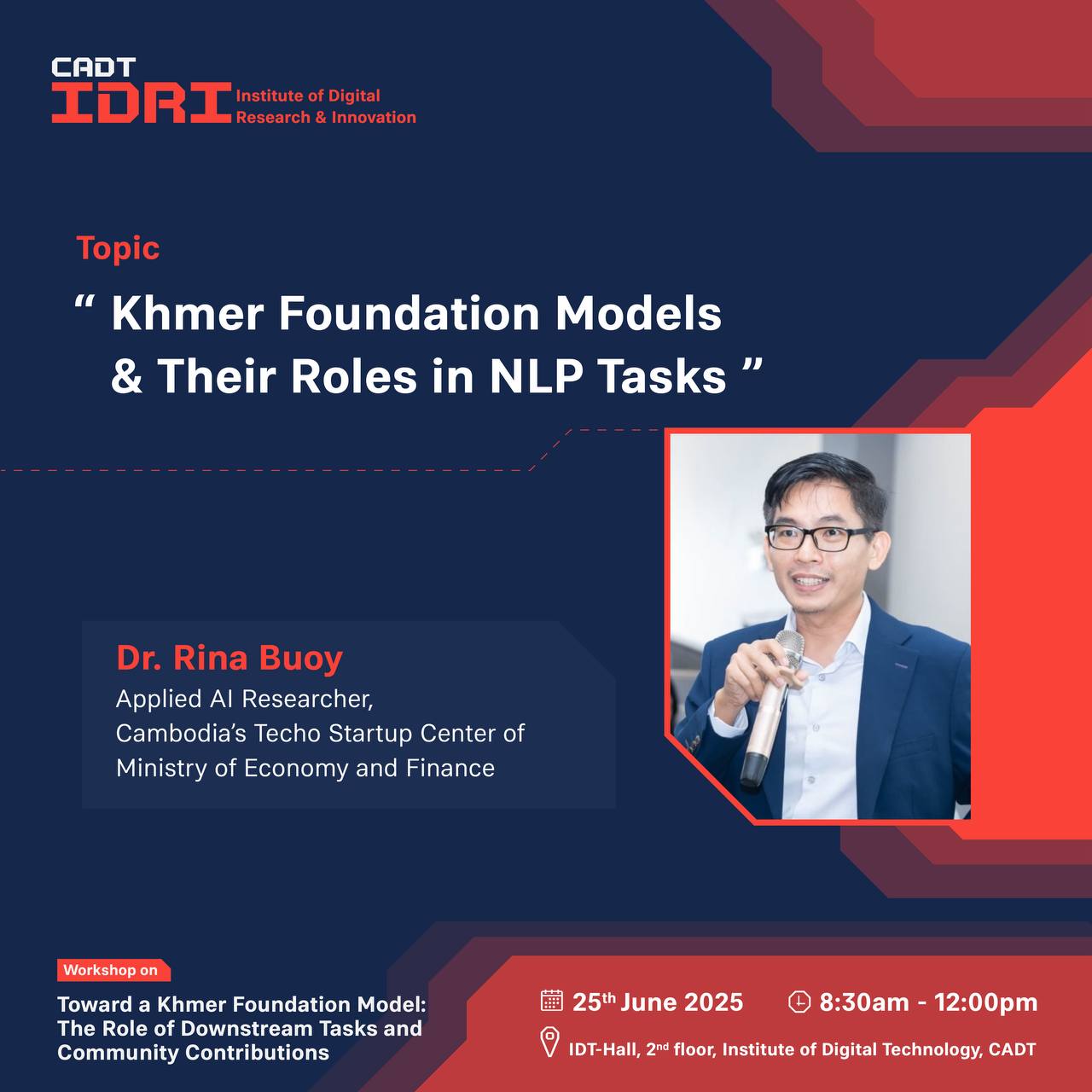
Khmer Foundation Models & Their Roles in NLP Tasks
Published on Wednesday, 25-06-2025
Unveiling the Power of Foundation Models in Khmer NLP
In the rapidly evolving landscape of Artificial Intelligence, Foundation Models, especially Large Language Models (LLMs), are reshaping how we interact with technology. But what exactly are they, and how can they be tailored to languages like Khmer, which presents unique challenges? This post will delve into these powerful models, their applications, and the exciting future of Khmer Natural Language Processing (NLP).
What is a Foundation Model?
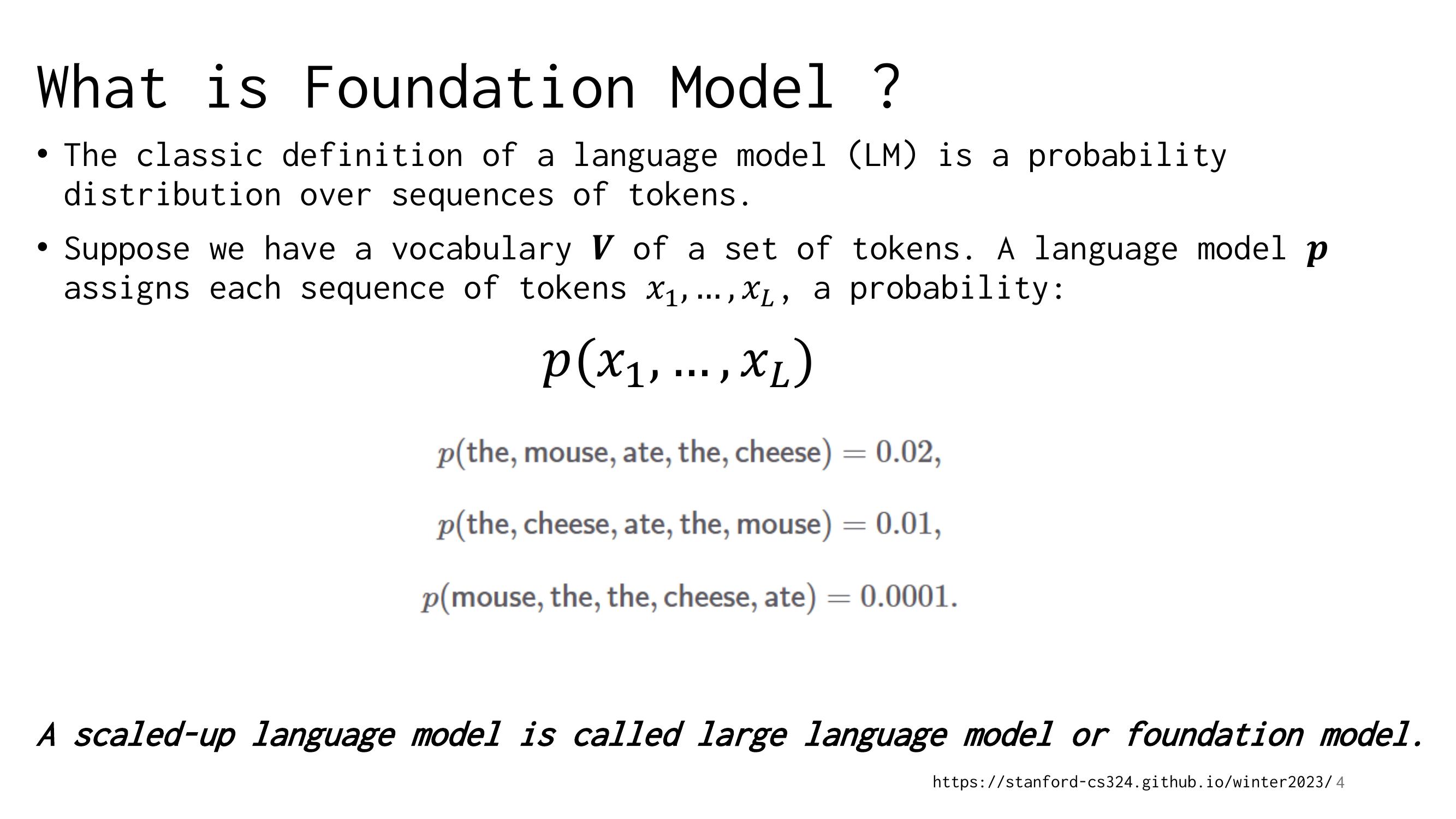
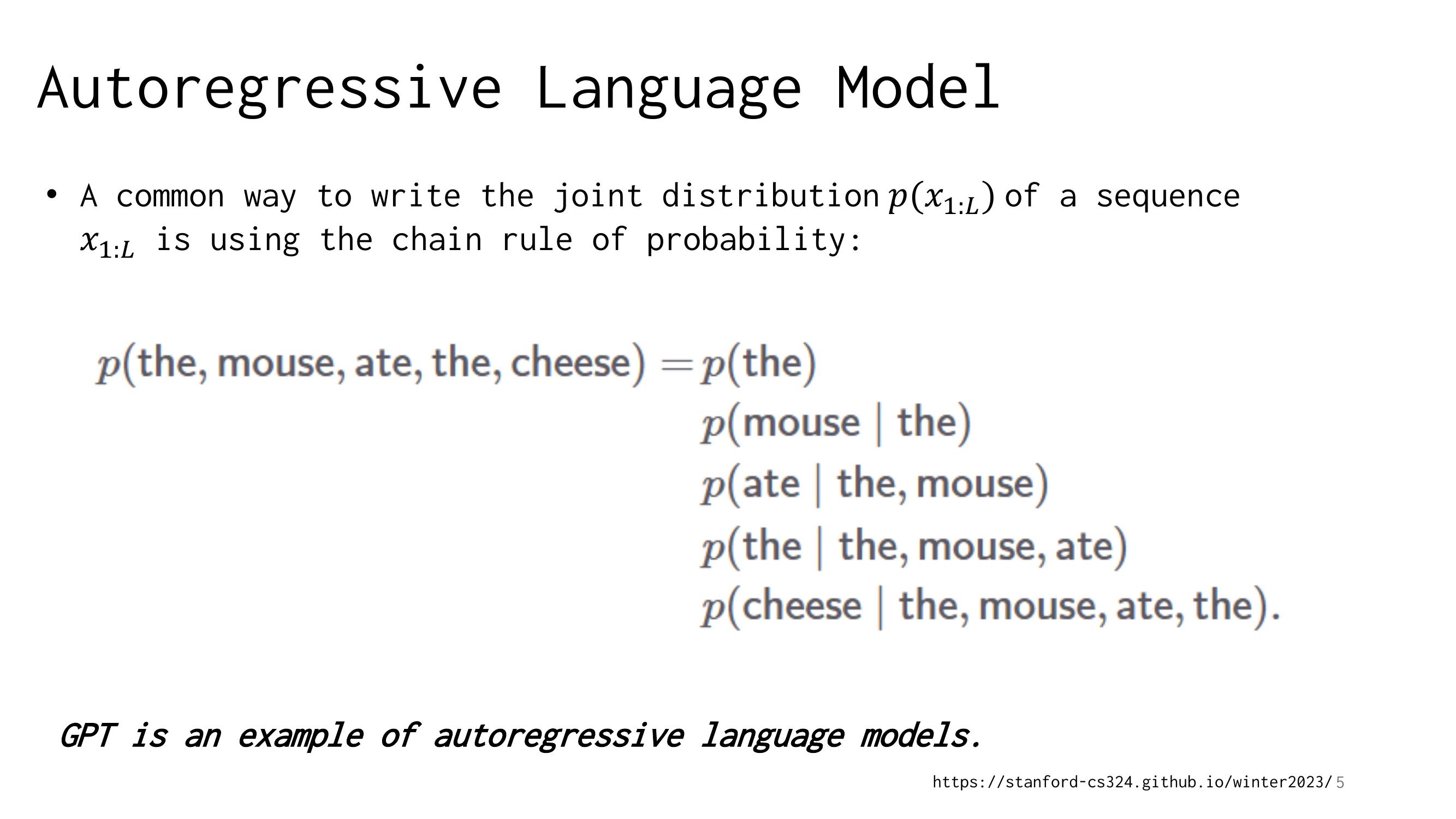
At its core, a language model (LM) is a probability distribution over sequences of tokens. Imagine a vocabulary of all possible words or characters. A language model assigns a probability to any given sequence of these tokens. For example, it can tell us that “the mouse ate the cheese” is a far more probable sequence than “mouse the the cheese ate”.
When we scale up these language models significantly, they become what we call Large Language Models (LLMs) or Foundation Models. These models serve as a powerful base upon which more specialized AI applications can be built.
The Journey of a Foundation Model: From Building to Specialization
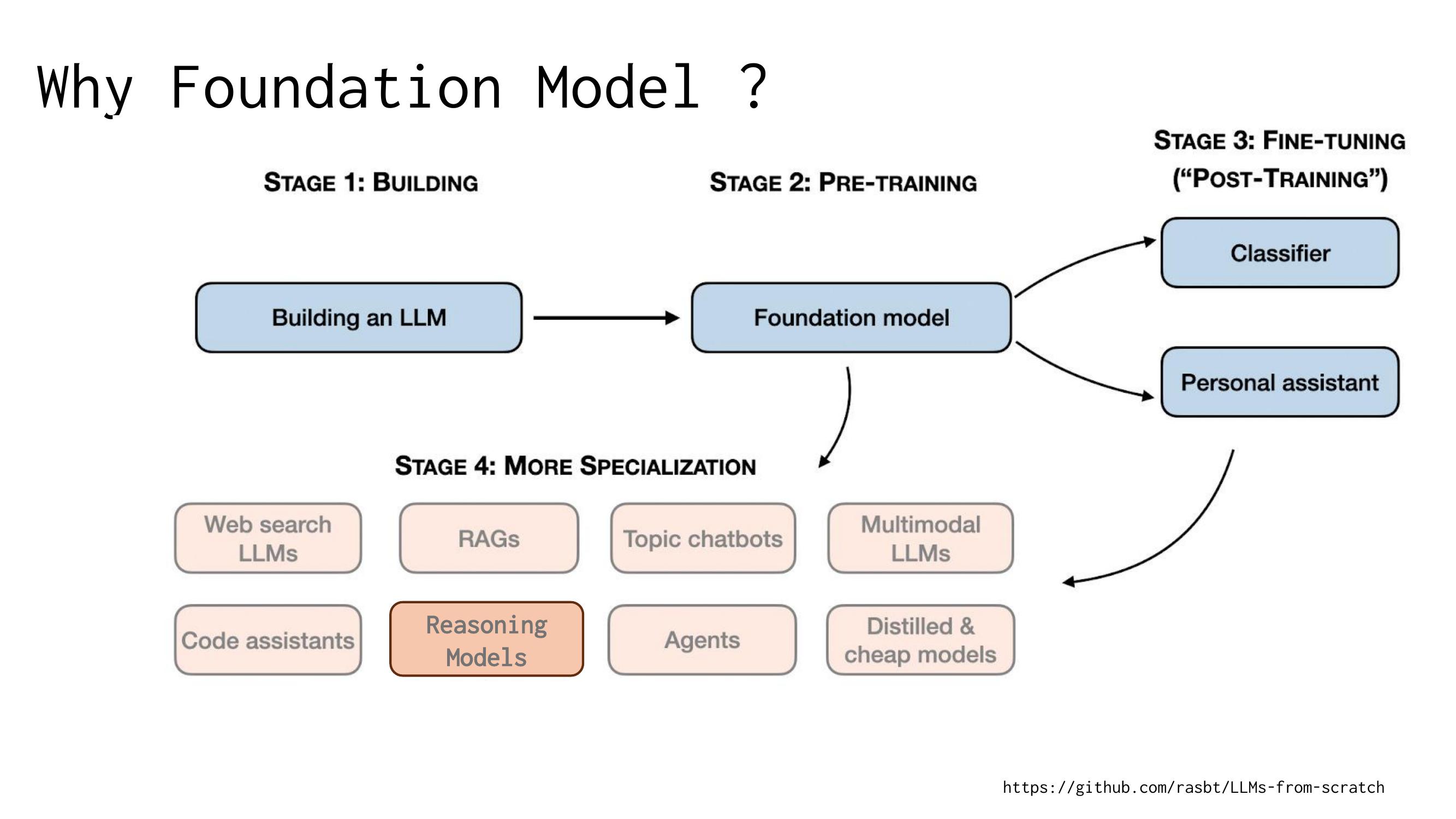
The development and application of a Foundation Model typically follow several stages:
- Stage 1: Building an LLM: This is the initial phase where the core large language model is constructed.
- Stage 2: Pre-training: The LLM undergoes extensive pre-training on a massive amount of text data. This stage creates the “Foundation Model”.
- Stage 3: Fine-tuning (“Post-training”): The pre-trained Foundation Model can then be fine-tuned for specific tasks, such as acting as a classifier or a personal assistant.
- Stage 4: More Specialization: Further specialization leads to various applications like web search LLMs, Retrieval Augmented Generation (RAGs), topic chatbots, multimodal LLMs, code assistants, reasoning models, and AI agents.
Types of Language Models: Autoregressive vs. Masked
There are two primary architectures for training these language models:
- Autoregressive Language Models: These models predict the next token in a sequence based on all the preceding tokens. Think of it like predicting the next word in a sentence one by one. GPT (Generative Pre-trained Transformer) models are a prime example of autoregressive language models.
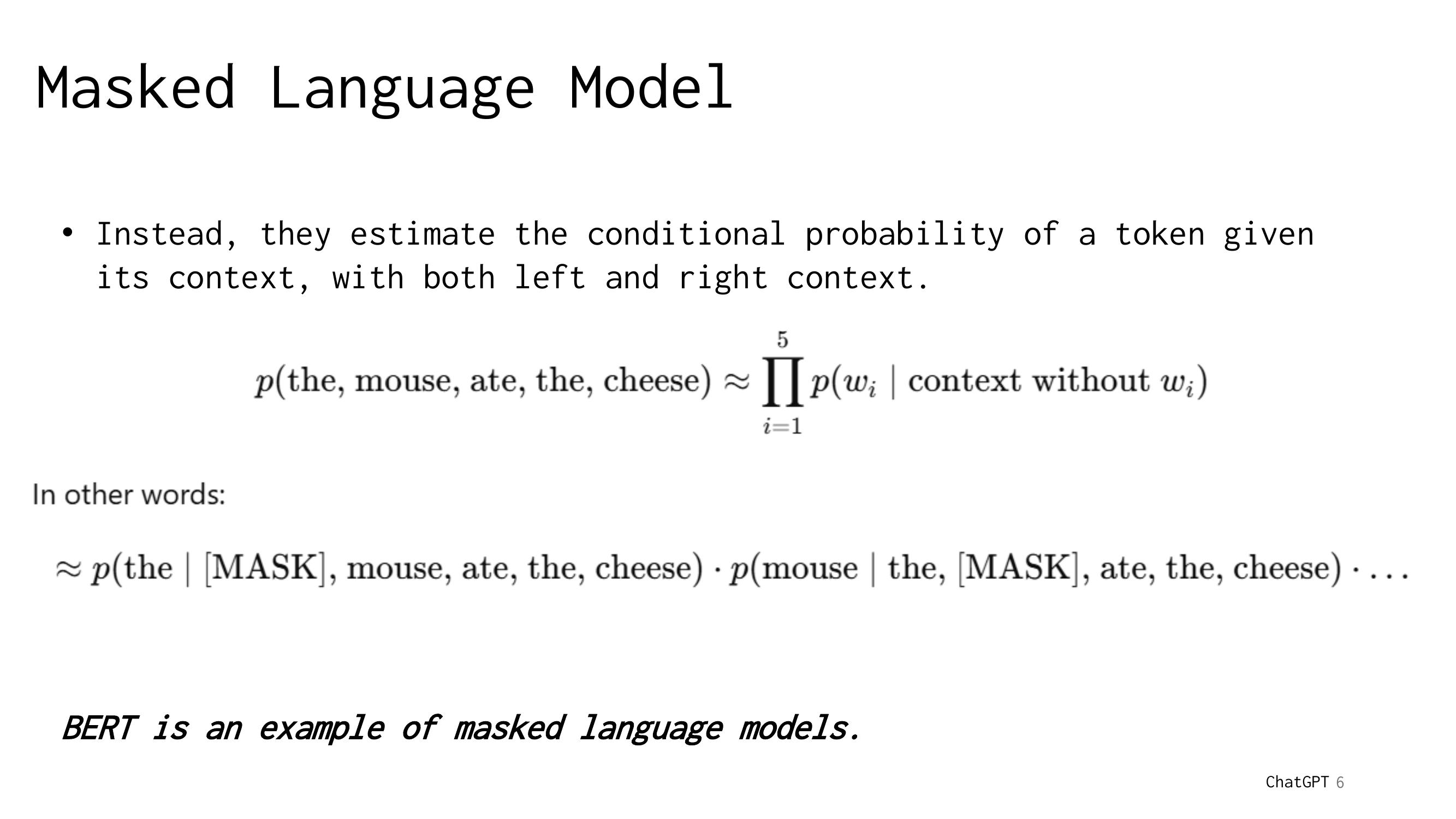
- Masked Language Models: Instead of predicting the next token, these models estimate the probability of a token given its surrounding context, including both the left and right sides. This means they can fill in missing words in a sentence. BERT (Bidirectional Encoder Representations from Transformers) is a well-known example of a masked language model.
The Challenge of “Large” for Khmer
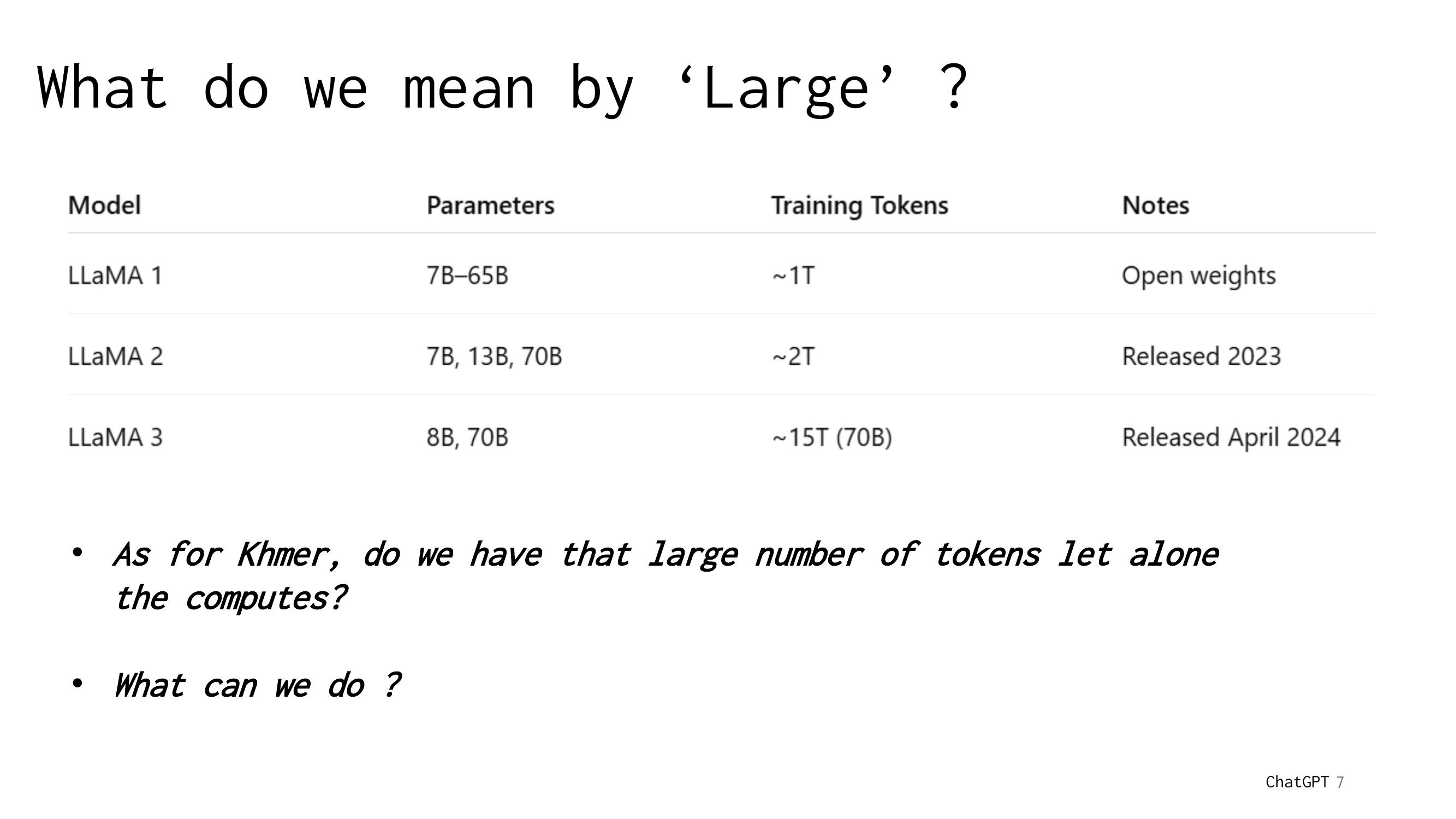
When we talk about “large” in LLMs, we’re referring to the massive number of parameters and the vast amount of training data (tokens) they process. For instance:
- LLAMA 1: Ranges from 7 billion to 65 billion parameters and was trained on approximately 1 trillion tokens.
- LLAMA 2: Features 7 billion, 13 billion, and 70 billion parameter versions, trained on around 2 trillion tokens.
- LLaMA 3: Offers 8 billion and 70 billion parameter models, with the 70B version trained on an estimated 15 trillion tokens.
This raises a crucial question for languages like Khmer: do we have access to such a colossal number of tokens and the computational resources required to train such massive models?
What Can We Do for Khmer? Looking Smaller, Looking Narrower
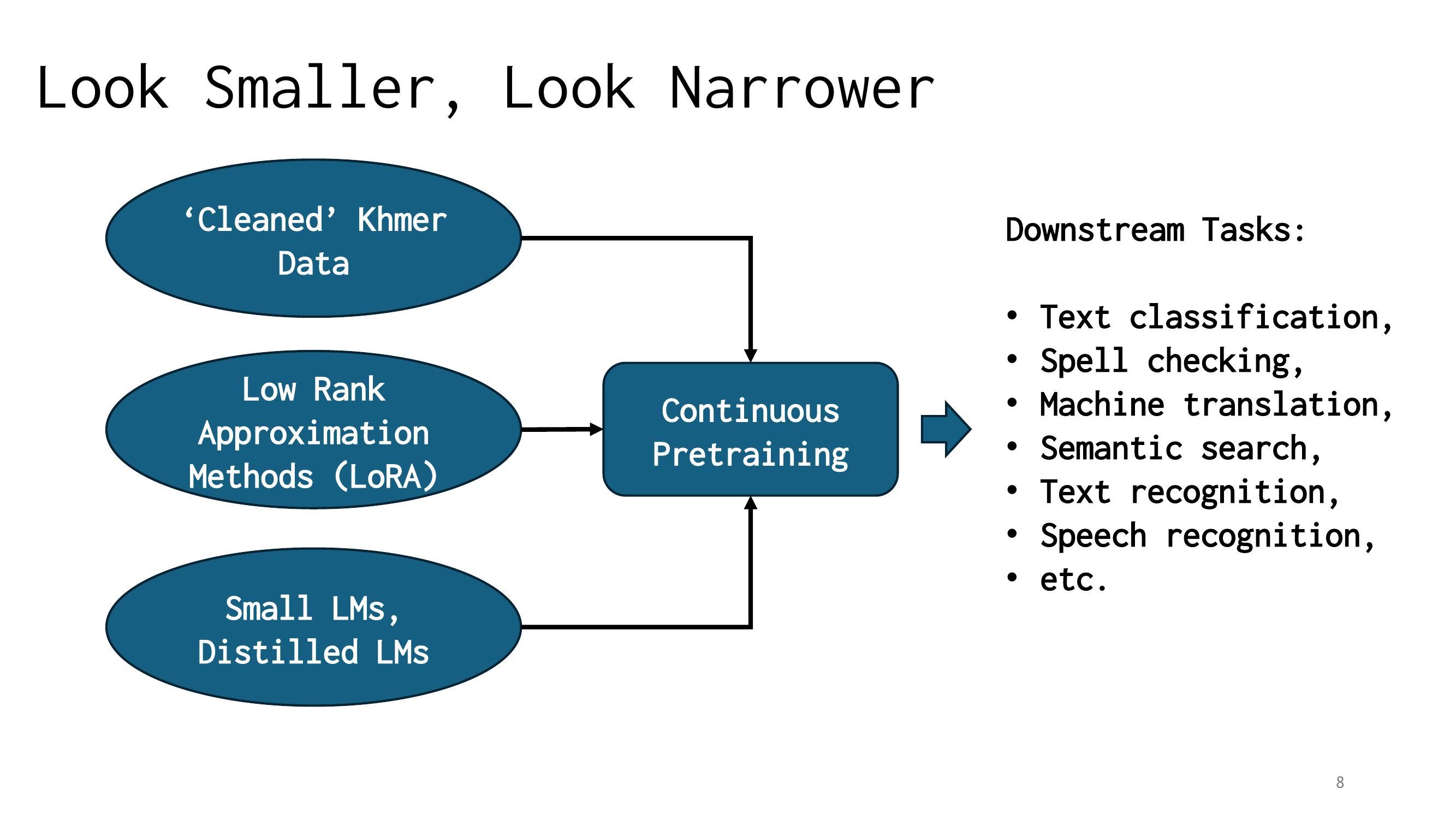
Given the challenges of scale, the strategy for Khmer NLP involves a more focused approach:
- “Cleaned” Khmer Data: The emphasis is on curating and utilizing high-quality, clean Khmer data.
- Low-Rank Continuous Approximation Pretraining Methods (LoRA): These methods allow for efficient adaptation of large models without retraining the entire model, reducing computational costs.
- Small LMs, Distilled LMs: Instead of building colossal models from scratch, the focus shifts to smaller, more efficient Language Models or “distilled” versions of larger models, which retain much of the larger model’s performance while being more computationally friendly.
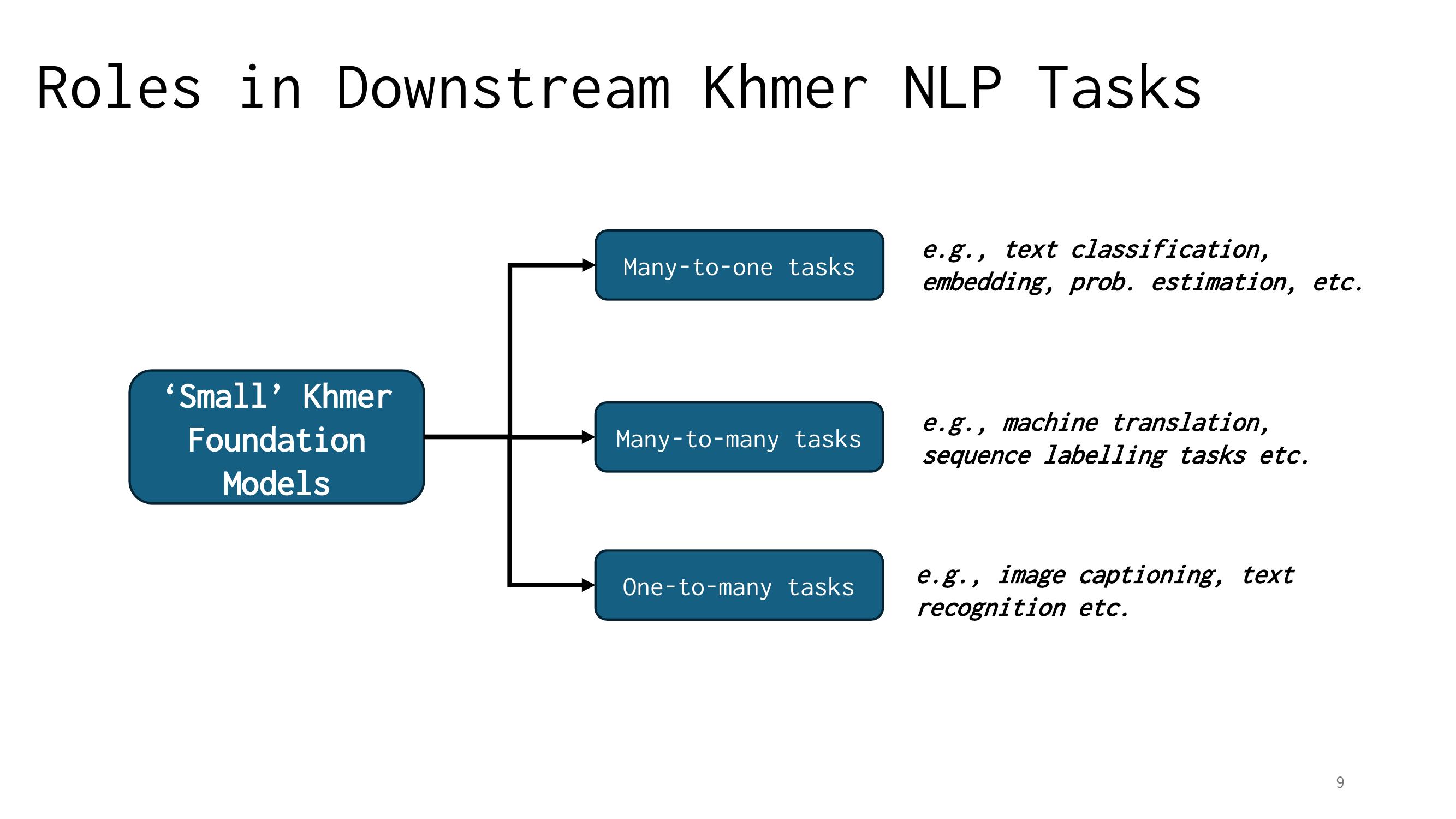
These smaller, specialized Khmer Foundation Models can then be applied to various downstream tasks, including text classification, spell checking, machine translation, semantic search, text recognition, and speech recognition.
Roles in Downstream Khmer NLP Tasks
“Small” Khmer Foundation Models can excel in different types of NLP tasks:
- Many-to-one tasks: Such as text classification, embedding, and probability estimation.
- Many-to-many tasks: Like machine translation and sequence labeling tasks.
- One-to-many tasks: Including image captioning and text recognition.
Practical Applications: Use Cases for Khmer NLP
The application of these models to Khmer is already showing promising results:
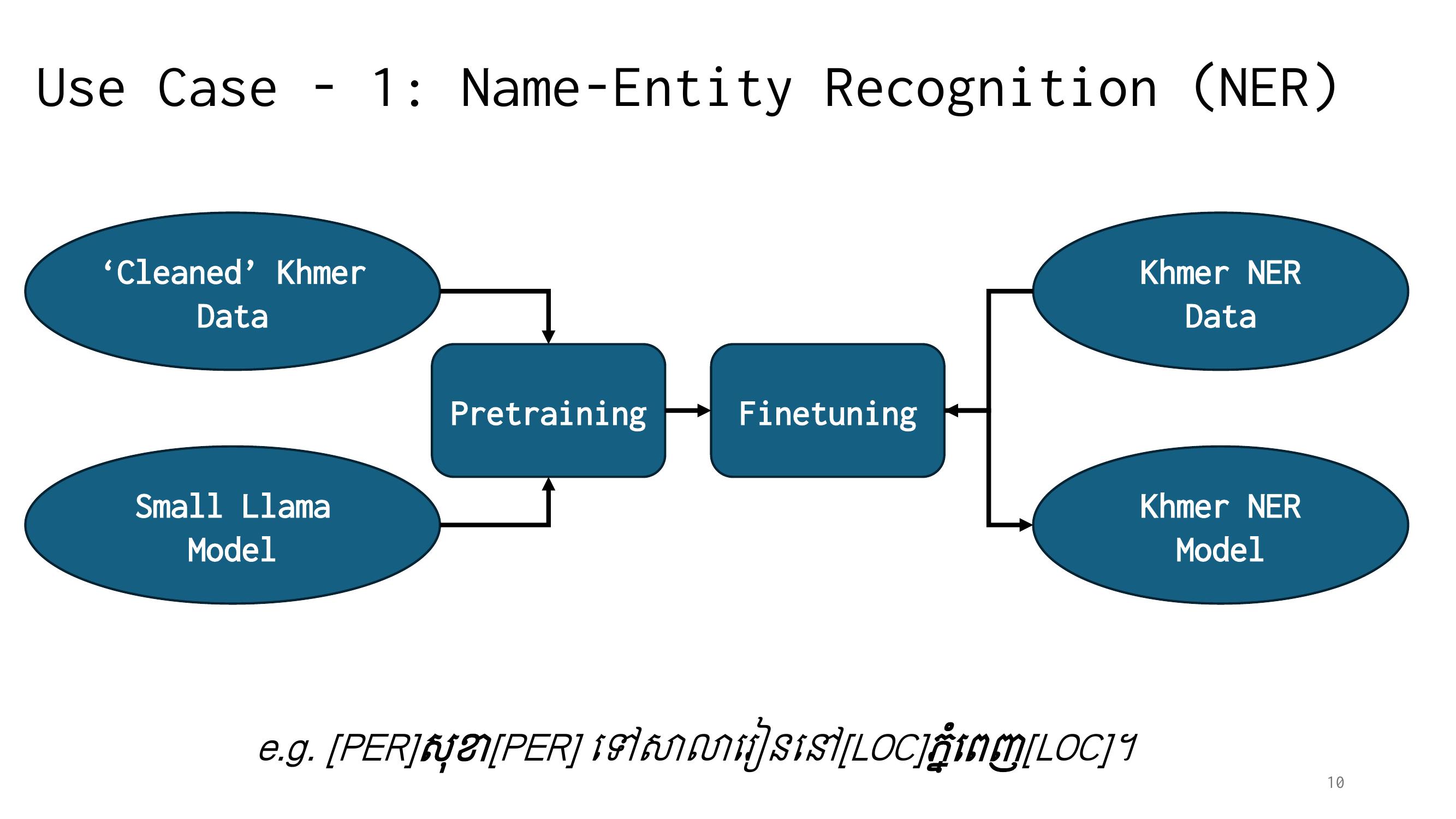
- Use Case 1: Name-Entity Recognition (NER): By pre-training a small Llama model on cleaned Khmer data and then fine-tuning it with Khmer NER data, models can be developed to identify entities like people and locations within Khmer text. For example, identifying “សុខា” as a person and “ភ្នំពេញ” as a location in the sentence “សុខា ទៅសាលារៀននៅភ្នំពេញ។“.
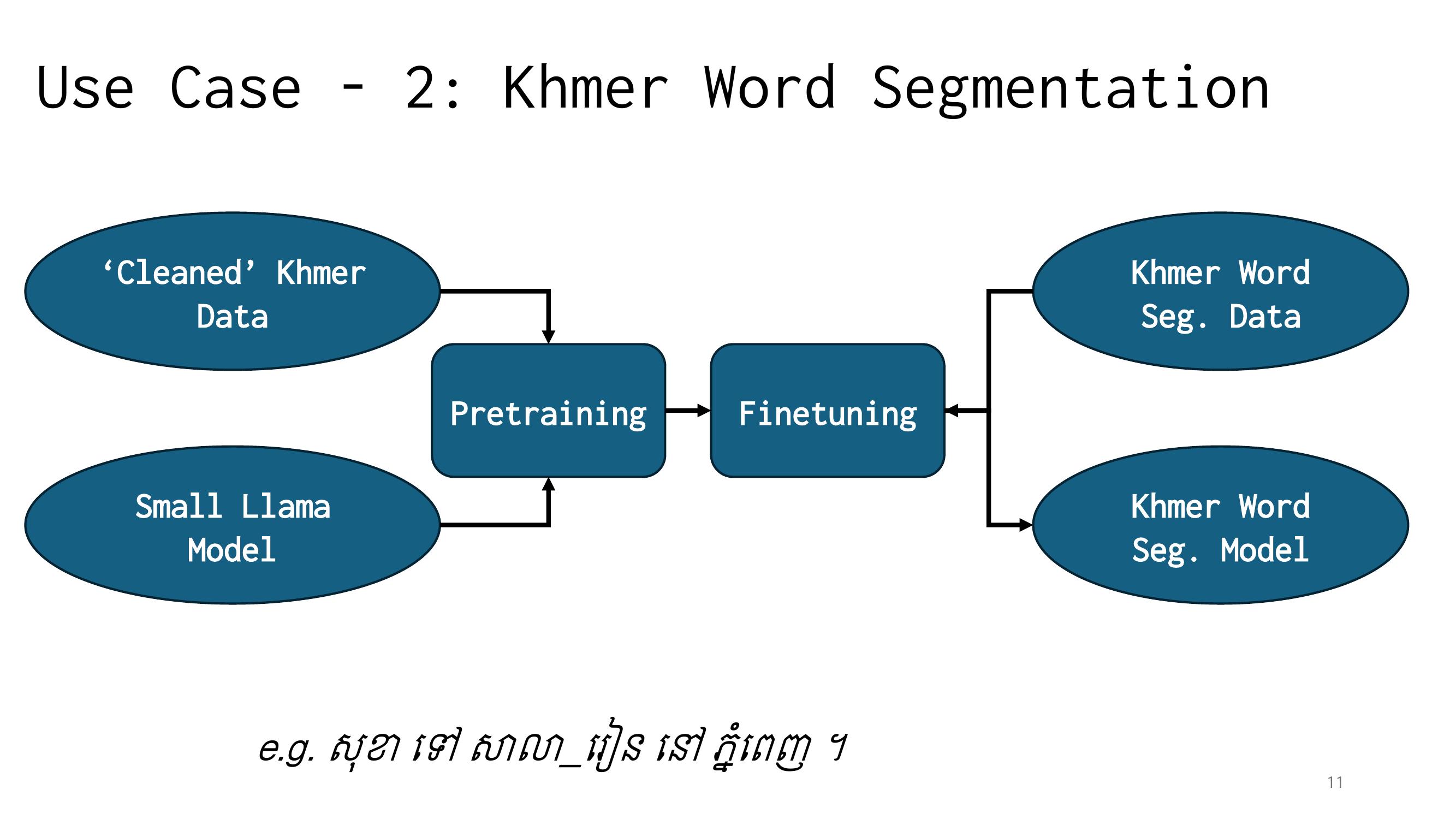
- Use Case 2: Khmer Word Segmentation: Similarly, a small Llama model can be pre-trained and fine-tuned with Khmer word segmentation data to accurately segment words in Khmer sentences. For example, segmenting “សុខា ទៅ សាលា_រៀន ទៅ ភ្នំពេញ ។“.
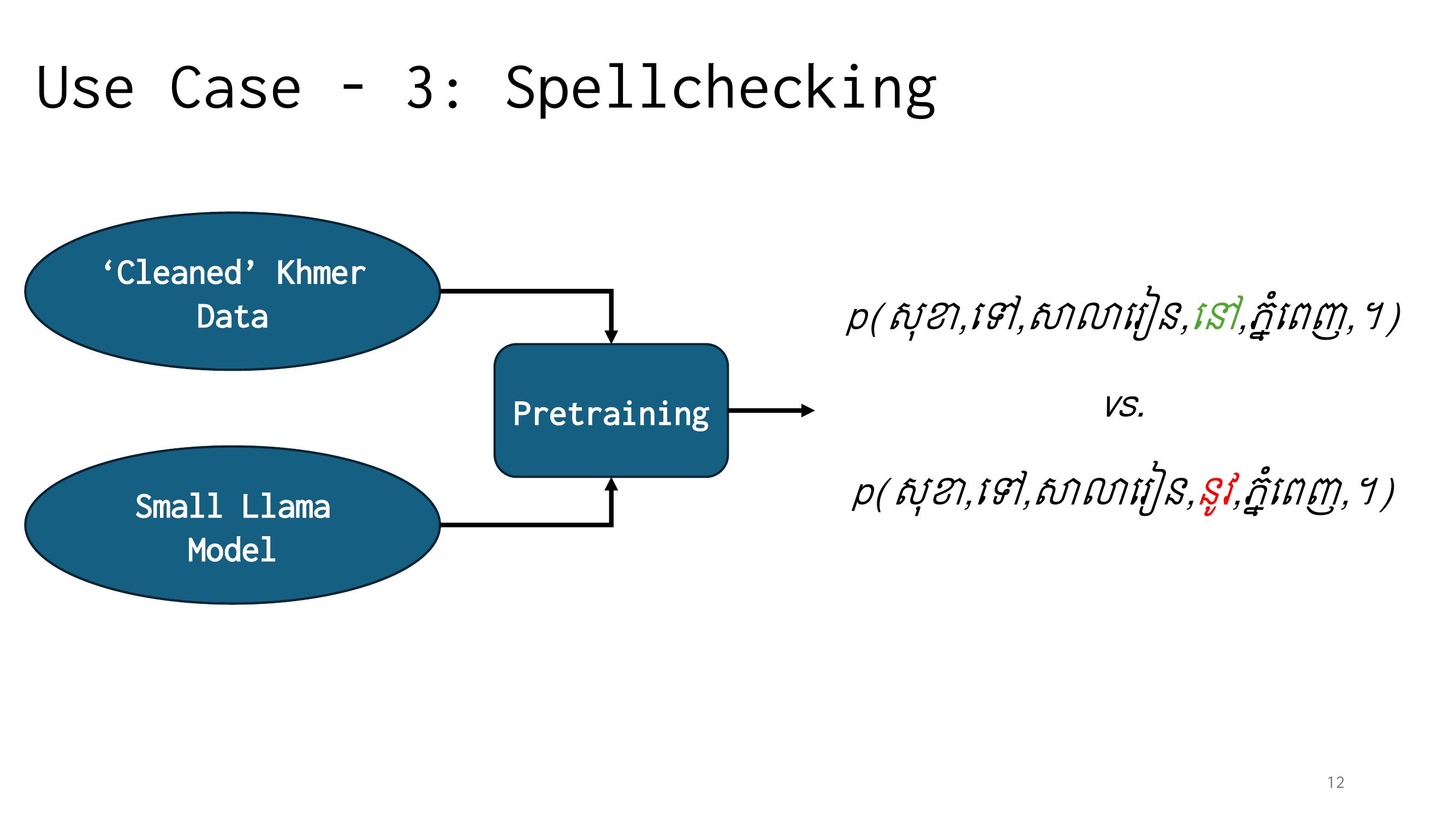
- Use Case 3: Spellchecking: Foundation models can also be used for spellchecking by comparing the probability of different word sequences to identify and suggest corrections for misspelled words.
The Road Ahead: Future Research
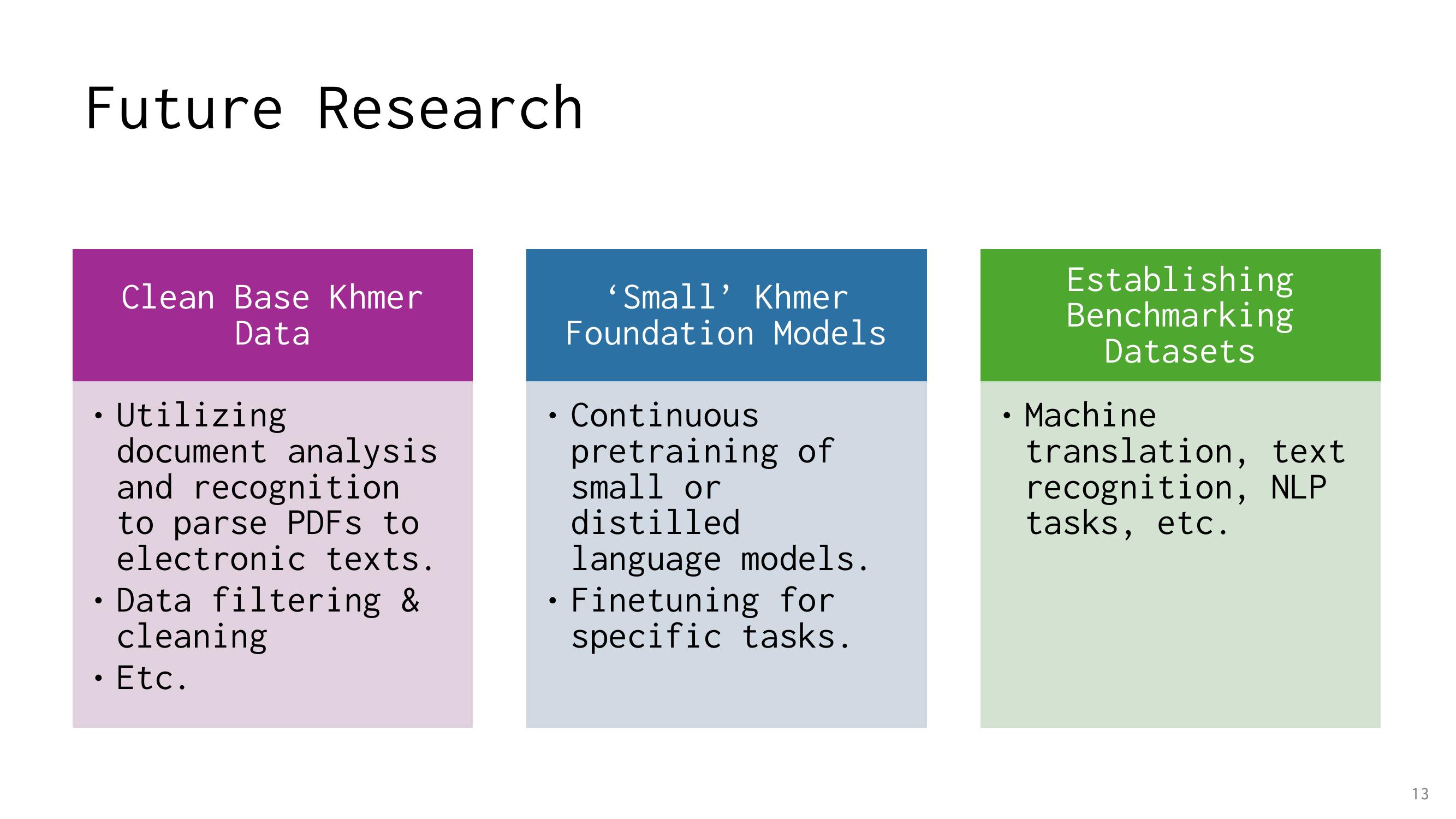
The future of Khmer NLP with Foundation Models is bright and focuses on several key areas:
- Clean Base Khmer Data: This involves utilizing document analysis and recognition to convert PDFs into electronic texts, along with rigorous data filtering and cleaning.
- ‘Small’ Khmer Foundation Models: Continued research will focus on continuous pre-training of small or distilled language models and their fine-tuning for specific tasks.
- Establishing Benchmarking Datasets: Creating robust benchmarking datasets for tasks like machine translation, text recognition, and various NLP tasks is crucial for evaluating and improving model performance.
These ongoing efforts are paving the way for more accurate, efficient, and versatile NLP applications in the Khmer language, opening up new possibilities for technology and communication.